Key Takeaways
- PCB assembly is the process of mounting and soldering electronic components onto printed circuit boards, forming the foundation for functioning electronic devices.
- The two key assembly techniques are Surface Mount Technology (SMT), supporting high-density, compact designs, and Through-Hole Technology (THT), providing robust connections for high-reliability and high-power applications.
- The assembly process includes precise component placement, automated soldering, thorough inspection, and testing to ensure device performance and reliability.
- PCB assembly services can be Turnkey (provider-managed sourcing and assembly) or Consigned (customer-supplied components), allowing manufacturers flexibility in production and supply chain management.
- Common challenges in PCB assembly include handling miniaturized components, ensuring solder joint reliability, managing quality assurance, and sourcing authentic materials.
- Implementing process optimization and strict quality control are essential best practices for consistent, high-quality PCB assemblies in various industry sectors.
PCB assembly is the essential process of mounting and soldering electronic components onto printed circuit boards to create functioning devices. Every smartphone, laptop, and electronic gadget relies on this precise manufacturing technique to connect tiny components and ensure reliable performance. Without proper assembly by a skilled pcb assembly manufacturer, modern electronic devices simply wouldn’t operate as intended.
Understanding PCB Assembly
PCB assembly uses automated and manual steps to attach and solder electronic components onto a printed circuit board. Surface mount technology (SMT) and through-hole technology (THT) are the two primary assembly types. SMT places components like resistors and microchips directly onto the board surface. THT inserts component leads into board holes before soldering.
Quality PCB assembly ensures signal integrity and device reliability. Each stage—component placement, solder paste application, reflow soldering, inspection, and testing—has defined tolerances. Defects such as misalignment or cold joints often reduce performance or durability in finished products.
Global providers like OurPCB in China offer comprehensive PCB manufacturing and assembly. OurPCB supports quick prototyping and volume production for smartphones, automotive modules, and industrial controls. Their assembly equipment maintains high placement accuracy, and factory inspection processes comply with IPC-A-610 standards, according to company documentation.
SMT assembly supports high input/output device density for consumer electronics. THT connects high-power parts firmly in applications such as power supplies. Both techniques allow manufacturers to match specific application needs for global electronics designers and device producers.
Key Components Involved in PCB Assembly
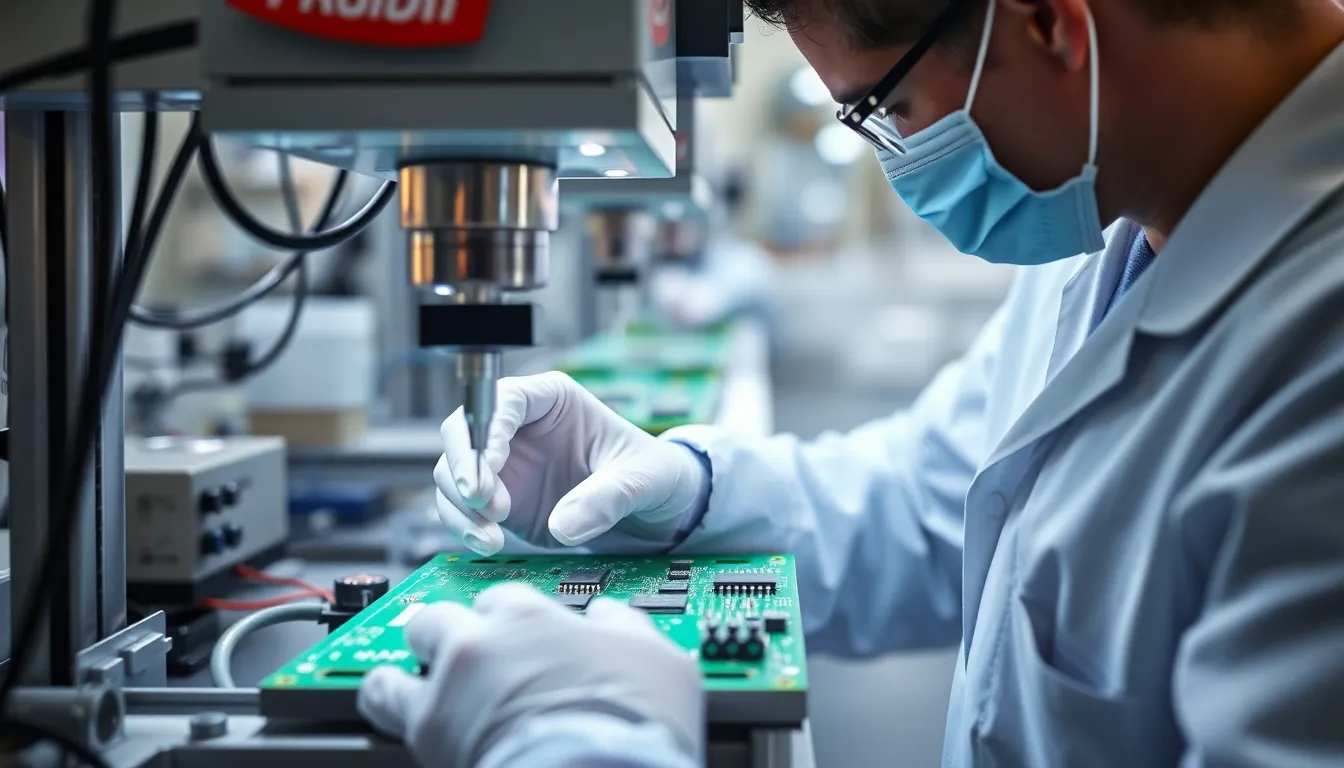
PCB assembly centers on mounting and connecting electronic components onto fabricated circuit boards. Main techniques—surface mount technology (SMT) and through-hole technology—define how components join the board to form complete, functioning electronics.
Surface Mount Technology (SMT)
Surface mount technology (SMT) attaches components directly to the PCB’s surface. Automated pick-and-place machines deposit small, leadless components like resistors, capacitors, and integrated circuits onto solder paste applied to pre-defined pads. Reflow ovens melt the solder, forming electrical connections. SMT increases component density which allows designs for smartphones, wearable devices, and compact modules. OurPCB uses high-speed machines to maintain tight placement tolerances and supports BGA, QFP, and 0201-size parts. Automated optical inspection (AOI) systems ensure placement accuracy and solder quality according to IPC-A-610 standards.
Through-Hole Technology
Through-hole technology inserts electronic component leads through drilled holes on the PCB. Operators or machines then solder these leads on the opposite side, producing strong mechanical connections for high-power or high-reliability applications. Common components include connectors, transformers, and large capacitors for power supplies and industrial controls. OurPCB employs wave soldering or selective soldering for high-throughput and precise results, especially on double-sided or mixed-technology boards. Inspection and testing confirm each joint meets industry reliability requirements, including those for automotive and communication equipment manufacturing.
The PCB Assembly Process Explained
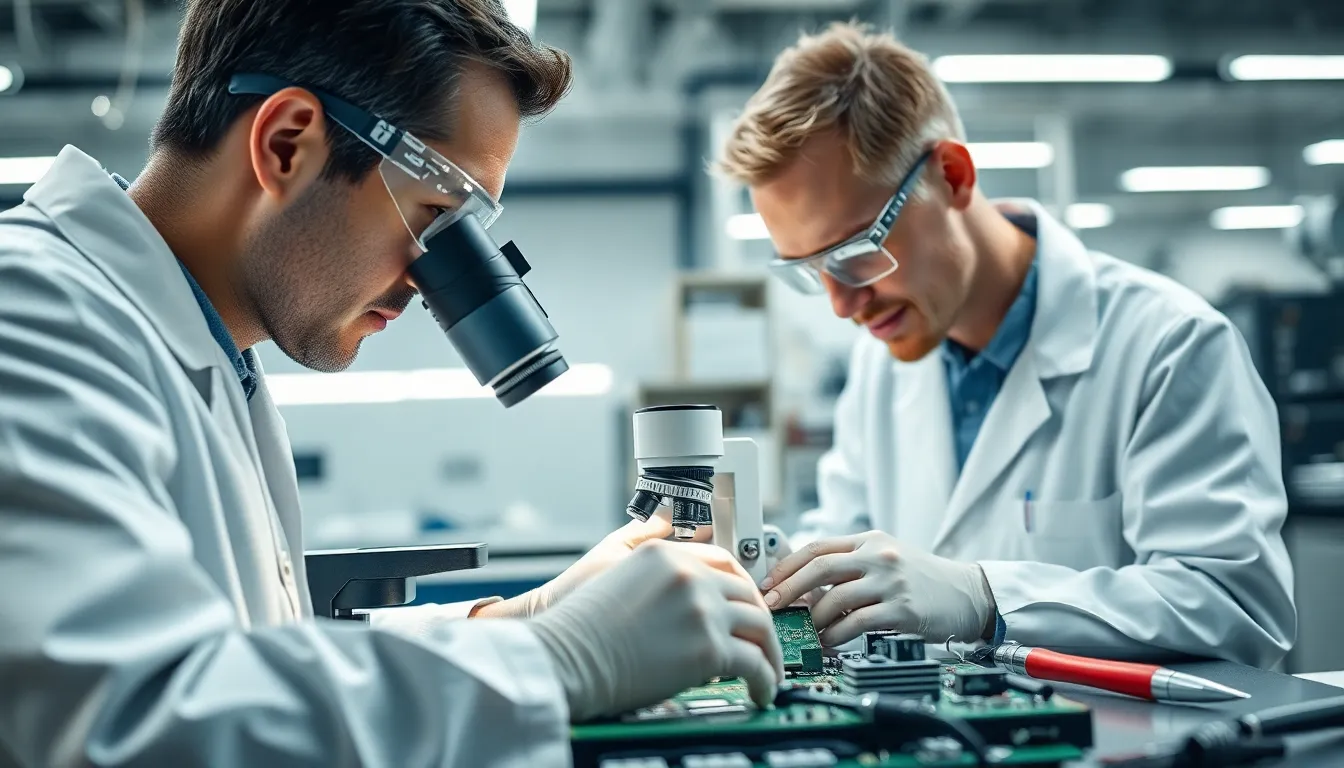
PCB assembly combines component placement, soldering, inspection, and testing in a defined sequence. Production uses automated systems to improve reliability and accuracy for consumer, industrial, and automotive electronics.
Soldering Techniques
Soldering joins electronic components to printed circuit boards using heat and solder alloy. Surface mount technology uses reflow soldering, where machines place components on solder-pasted pads, then transport the board through a reflow oven that melts the solder, creating electrical connections. Through-hole technology uses either wave or selective soldering. In wave soldering, boards pass over a molten solder wave that bonds component leads to the board. Selective soldering targets individual joints, minimizing heat exposure for sensitive areas. OurPCB operates high-speed SMT lines and advanced soldering stations, supporting assemblies with up to 0402 package sizes and multilayer boards for telecom, medical, and automotive uses.
Inspection and Testing
Inspection and testing verify assembly quality and component functionality. Automated optical inspection checks for misplacement, wrong polarity, or excess solder. X-ray imaging detects problems in hidden solder joints, common for BGAs or high-density packages. Functional testing then applies power and simulates real signals to confirm device performance. OurPCB uses in-circuit and functional testers alongside visual and AOI systems. PCB assemblies are certified per IPC-A-610, class 2 or 3 standards, as required by customer application. Batch traceability and comprehensive reporting ensure assemblies meet client documentation and compliance needs.
Types of PCB Assembly Services
PCB assembly services support different sourcing models to fit production requirements and supply chain constraints. These approaches help electronics manufacturers align project timelines, material budgets, and product control.
Turnkey PCB Assembly
Turnkey PCB assembly manages the entire process from component procurement to complete assembly. Service providers like OurPCB source all components, manufacture bare circuit boards, and perform surface mount or through-hole assembly in one workflow. The approach enables customers without established supply chains to launch prototypes and production runs without internal logistics. Turnkey solutions from OurPCB include material selection, standard-compliant assembly, soldering, testing, and inspection under ISO9001 and IPC-A-610 standards. This option supports engineering teams with short development cycles and guarantees validated part sourcing. Clients receive ready-to-use assembled boards, with batch traceability and comprehensive quality reporting as standard deliverables.
Consigned PCB Assembly
Consigned PCB assembly uses customer-supplied parts for the assembly process. Clients manage component selection and procurement, supplying OurPCB with kits including all necessary items and the designed bare boards. This method optimizes control when clients have approved supplier lists, negotiated pricing, or require specialty parts not stocked by contract assemblers. OurPCB focuses on expertly assembling these customer-furnished kits using both SMT and THT equipment, following detailed build instructions and PCB layouts. Each board undergoes inspection and functional testing per the customer’s requirements. Consigned assembly minimizes supply chain risk from substitutions and ensures compliance with proprietary part standards and design integrity throughout the production run.
Challenges and Best Practices in PCB Assembly
Component Miniaturization
Component miniaturization in PCB assembly creates handling and placement challenges, especially for parts below 0201 size. Automated pick-and-place machines at OurPCB achieve high accuracy by supporting 01005 chips and maintaining tolerance limits to reduce misalignment and solder bridging.
Solder Joint Reliability
Solder joint reliability maintains electrical connectivity and resists mechanical stress. Issues like cold solder joints or voids often stem from incorrect reflow temperature or insufficient solder paste coverage. OurPCB uses profile-controlled reflow ovens and automated solder paste inspection, minimizing defects per IPC-A-610 Class 2 and Class 3 standards.
Quality Assurance
Quality assurance in PCB assembly ensures finished boards meet performance criteria. Optical inspection, in-circuit testing, and functional testing quickly identify issues. OurPCB employs AOI, X-ray imaging for BGAs, and batch traceability to locate faults and confirm compliance with customer standards.
Material Sourcing
Material sourcing affects lead times and component authenticity. Shortages or counterfeit parts can impact product delivery and reliability. OurPCB sources from authorized distributors and checks part traceability, reducing the risk of counterfeit components in assemblies for sectors like medical or automotive.
Moisture Sensitivity
Moisture sensitivity impacts component reliability after soldering, leading to “popcorn” defects. OurPCB controls environment humidity with dry storage and pre-baking for moisture-sensitive components, especially for microcontrollers and memory ICs.
Process Optimization
Process optimization in PCB assembly blances speed, yield, and cost. OurPCB customizes assembly line setup for high-mix or high-volume applications and adjusts reflow profiles and placement speeds to support quick-turn and production-scale jobs for global clients.
About OurPCB
OurPCB, located in Shijiazhuang, Hebei, China, is a leading provider of PCB manufacturing and assembly services.
Led by owner Hommer Zhao, OurPCB offers a wide range of services, including turnkey PCB assembly, PCB design services, and rapid prototyping. The company is committed to bringing your PCB concepts to life with precision and efficiency, providing high-quality solutions for industries like electronics, telecommunications, and automotive.
Contact:
Hommer Zhao, Owner
Phone: +86-311-85981900
Email: [email protected]
Address: 3rd Floor, Nanhai Plaza, NO. 505 Xinhua Road, Xinhua District, Shijiazhuang, Hebei, China
Website: www.ourpcb.com
Follow us:
Facebook
Frequently Asked Questions
What is PCB assembly and why is it important?
PCB assembly is the process of placing and soldering electronic components onto a printed circuit board (PCB). It’s crucial because it turns a bare board into a functional device, ensuring gadgets like smartphones and laptops work reliably and as intended.
What are the main methods used in PCB assembly?
The two primary methods are Surface Mount Technology (SMT) and Through-Hole Technology (THT). SMT mounts components directly on the PCB surface, while THT involves inserting leads through drilled holes, providing strong mechanical connections.
How does SMT differ from THT in PCB assembly?
SMT attaches components directly to the PCB using automated machines, making it ideal for compact devices with high component density. THT inserts component leads through holes in the PCB, creating stronger connections for high-power applications.
What quality standards are followed in PCB assembly?
Most PCB assembly providers, including companies like OurPCB, follow IPC-A-610 standards for quality. These standards help ensure assembled boards meet strict reliability, performance, and inspection criteria required in electronics manufacturing.
Why are inspection and testing critical in PCB assembly?
Inspection and testing help detect defects and verify functionality before devices ship. This includes automated optical inspection and functional testing to confirm that the final product performs as expected and meets quality standards.
What is turnkey PCB assembly?
Turnkey PCB assembly is a service where the provider manages the entire process, from component sourcing to final assembly and testing. This allows customers to focus on design and reduces the complexity of managing multiple suppliers.
What is consigned PCB assembly?
In consigned PCB assembly, the customer supplies all or most of the parts, and the assembly provider focuses on building the boards according to the customer’s specifications, ensuring component traceability and compliance.
What challenges are common in PCB assembly?
Common challenges include handling tiny components due to miniaturization, ensuring solder joint reliability, avoiding counterfeit parts, managing moisture-sensitive components, and optimizing assembly processes for speed, yield, and cost.
How does PCB assembly impact device reliability?
High-quality PCB assembly ensures strong connections, proper signal transmission, and reduced failure rates in devices. Accurate placement, reliable soldering, and thorough inspection contribute significantly to overall electronics reliability.
What should I look for in a PCB assembly provider?
Look for providers with adherence to industry standards (such as IPC-A-610), advanced equipment for SMT and THT, comprehensive inspection and testing processes, a reliable supply chain, and customizable service options like turnkey solutions.