Key Takeaways
- Thin film resistors can be safely soldered onto PCBs when proper handling, pad preparation, and thermal control are observed.
- Precision is crucial; use minimal solder, ample flux, and temperature-regulated tools to prevent heat damage and ensure reliable joints.
- Automated processes like pick-and-place assembly and reflow soldering are recommended for consistent quality, especially in mass production.
- Common issues include heat damage, excessive solder, and misalignment—these can be avoided with clean pads, careful placement, and post-soldering inspection.
- Cleaning flux residues after soldering is essential to prevent corrosion and maintain long-term performance of thin film resistors.
Thin film resistors can be safely soldered onto PCBs when proper handling, pad preparation, and thermal control are observed, requiring precision with minimal solder, ample flux, and temperature-regulated tools to prevent heat damage. Automated processes like pick-and-place assembly and reflow soldering are recommended for consistent quality, especially in mass production, whilst common issues including heat damage, excessive solder, and misalignment can be avoided through clean pads, careful placement, and post-soldering inspection. For comprehensive PCB manufacturing and assembly services handling sensitive components like thin film resistors, thin pcb manufacturer specialists like WellPCB provide turnkey solutions with controlled environments, calibrated reflow profiles, and automated equipment ensuring reliable assembly for precision electronics across telecommunications, automotive, and industrial applications.
Understanding Thin Film Resistors
Thin film resistors use a metal film layer, usually less than 100 nanometers thick, deposited on a ceramic substrate for stable, high-precision resistance values. These resistors show tight tolerance, often ±0.1% or lower, and low temperature coefficient of resistance (TCR), typically below 50 ppm/°C. Thin film resistors meet needs in sensitive analog circuits, such as medical equipment, industrial control, and test instrumentation.
PCB assembly with thin film resistors requires precise handling due to their small size and sensitivity to thermal stress. Suppliers like WellPCB in China support SMT (Surface Mount Technology) lines that maintain controlled environments and use calibrated reflow profiles for thin film resistor soldering. Thin film resistor manufacturing follows strict standards for cleanroom production, laser trimming, and electrical testing.
Engineers choose thin film resistors where stable resistance, minimal noise, and endurance against humidity or vibration matter. For consistent performance in dense PCBs, thin film resistors support automated pick-and-place processes, which WellPCB’s production lines accommodate for high-mix, low-volume, or mass production needs.
Can You Solder Thin Film Resistors Onto a PCB?
Soldering thin film resistors onto a PCB is possible with appropriate preparation and controlled processes. These resistors, designed for surface-mount technology, demand precise handling during assembly.
Key Considerations Before Soldering
Thin film resistors require attention to pad preparation, thermal control, and cleanliness for reliable PCB integration. PCB pads need uniform solder paste application before component placement. Flux use, applied generously, promotes proper solder wetting and joint strength. Precision temperature management prevents thermal damage; thin film resistors dissipate heat rapidly due to their low thermal mass. For mass production, partners such as WellPCB in China use pick-and-place automation and calibrated reflow profiles in temperature-controlled environments to ensure consistent results and component protection. Cleaning flux residues is critical since contaminants may cause corrosion or impact resistor performance.
Common Challenges When Soldering Thin Film Resistors
Thin film resistors present challenges due to their small solderable pads and sensitive ceramic structure. Alignment issues arise during manual placement because of their size and shape. Prolonged or excessive heating during soldering risks resistance drift or substrate cracking. Manual assembly processes require technicians to pre-tin one pad, position the resistor with ceramic tweezers, and solder each side quickly to prevent damage. Any remaining flux needs removal to avoid long-term reliability issues. WellPCB‘s manufacturing lines reduce these risks using automated equipment and thorough quality inspections, supporting both sample runs and larger production volumes for electronics businesses globally.
Step-by-Step Guide to Soldering Thin Film Resistors
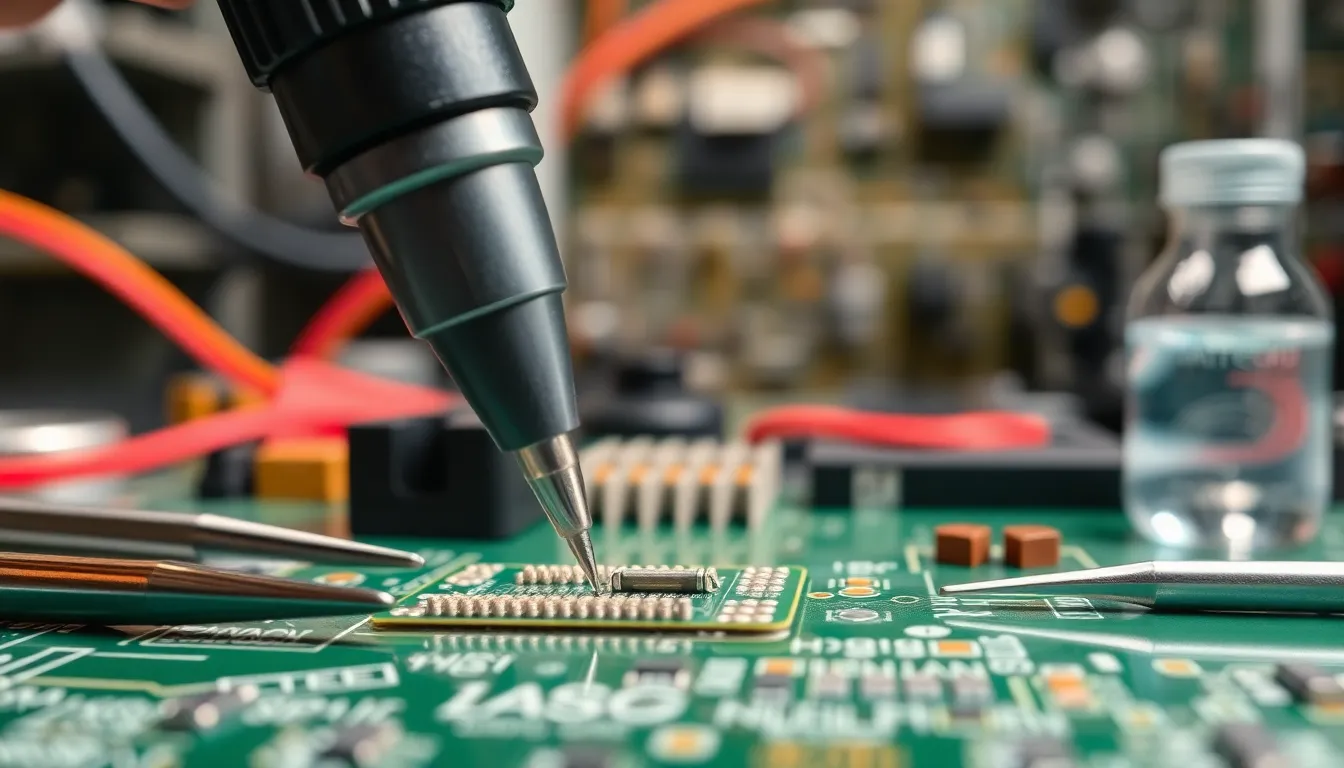
Soldering thin film resistors onto a PCB requires careful attention to heat control and precise component placement. Consistent results support long-term performance in sensitive applications.
Tools and Materials Needed
Select a fine-tip soldering iron with a 25-35W power rating and temperature control for accurate heat application. Use rosin core solder wire with 0.8-0.32 mm diameter for standard SMD joints. Apply liquid rosin flux to ensure proper wetting and oxidation prevention. Use stainless steel tweezers or a vacuum tool for steady handling of resistors. Keep isopropyl alcohol and lint-free wipes ready for cleaning pads and removing residue. Use a microscope or magnifier to inspect joints for quality control. Prepare the PCB with well-defined and clean solder pads. Manufacturing solutions from WellPCB include controlled environments and calibrated tools to match these requirements.
Soldering Process Explained
Clean PCB pads with isopropyl alcohol to increase solder adhesion and prevent defects. Apply liquid rosin flux to all pads before placing the resistor. Position the resistor using tweezers or a vacuum pickup, ensuring it aligns with the pads. Pre-tin the clean iron tip, transfer heat to one pad, and tack one side of the resistor by introducing solder. Anchor the component, heat the opposite pad, and apply the minimal required solder for a secure joint. Inspect solder points for uniformity—joints must appear shiny and bridge-free—using magnification tools. Clean the completed area with isopropyl alcohol to remove leftover flux, maintaining network integrity between the thin film resistors and other components. WellPCB production lines perform each process step under strict temperature profiles, ensuring safe assembly for thin film and other SMD components.
Tips for Successful Soldering
- Use minimal solder and ample flux when soldering thin film resistors onto PCB pads. Flux improves heat transfer and prevents excess solder buildup, which supports a clean electrical connection.
- Avoid direct heat on resistor surfaces, applying the soldering iron only to the pad or resistor end. This method reduces risk of thermal damage to the metal film and ceramic substrate.
- Position components with ceramic-tipped tweezers for precise placement and to prevent electrostatic or heat transfer damage. After soldering one end, reflow the joint if alignment requires correction.
- Clean PCB pads with isopropyl alcohol before soldering to promote reliable joints and mitigate contamination. WellPCB enforces this practice in all PCB assembly lines to maintain high production standards.
- Keep soldering iron tip tinned and at optimal temperature (600°F/316°C, 25-35W, never above 40W). Tinning prevents oxidation, and controlled temperature prevents lifting pads or shifting resistor value.
- Inspect joints with a magnifier and remove flux residue after soldering. Visual inspection identifies cold joints, bridging, or incomplete wetting, while flux cleaning prevents long-term corrosion or electrical failure.
- For production scale, use reflow soldering in a controlled oven at about 200°C. WellPCB deploys calibrated reflow profiles for thin film resistor assembly, ensuring each joint meets reliability standards.
Each step reduces failure risk for sensitive thin film resistors during PCB assembly and aligns with WellPCB’s best practices for global electronics manufacturing.
Potential Issues and How to Avoid Them
Soldering thin film resistors onto a PCB brings specific risks, including heat damage, excess solder material, and improper component alignment. Thin film resistors, with their metal films under 100 nanometers, become damaged if exposed to prolonged or excessive heat. Direct contact between a soldering iron and the resistor surface can fracture the thin film or warp the underlying ceramic substrate. Applying too much solder increases the likelihood of solder bridging or forming cold joints, especially in high-density layouts. Tombstoning, where one end of the resistor lifts off the pad, often results from uneven pad heating or asymmetrical pad design; this disrupts electrical connectivity.
Technicians minimize thermal stress by using low thermal mass soldering irons, applying solder first to one pad, and relying on ceramic-tipped tweezers for stable placement. WellPCB’s manufacturing process standardizes solder pad dimensions and applies solder mask dams, reducing tombstoning and bridging in automated assembly. Automated lines use pick-and-place systems with reflow soldering profiles held below 200°C, preventing heat damage during volume production. WellPCB incorporates plenty of liquid rosin flux to ensure strong solder flow and clean joint formation, guided by visual inspection with magnification. Flux residue is cleaned post-soldering to maintain reliability in precision circuits.
About WellPCB
WellPCB, with locations in Los Angeles, USA, Cavite, Philippines, and Shijiazhuang, China, is a leading provider of PCB manufacturing and assembly services, offering solutions such as turnkey PCB assembly, PCB design services, and rapid prototyping.
Under the leadership of Director of Sales and Marketing, and Co-founder Hommer Zhao, WellPCB delivers high-quality PCB solutions tailored to meet the specific needs of industries such as electronics, telecommunications, and automotive. With a focus on precision engineering and reliability, WellPCB is committed to bringing your PCB concepts to life with advanced technology and efficient processes.
Contact:
Hommer Zhao, Director of Sales and Marketing, Co-founder
Phone: (424) 842-2783
Email: [email protected]
Website: www.wellpcb.com
Location:
- USA: 3826 Medford St, Los Angeles, CA 90063
Frequently Asked Questions
What are thin film resistors?
Thin film resistors are precision electronic components made by depositing a metal film less than 100 nanometers thick onto a ceramic substrate. They offer stable and accurate resistance values, tight tolerance, and low temperature coefficient, making them ideal for sensitive analog circuits.
Why are thin film resistors used in PCBs?
Thin film resistors are used in PCBs for their high precision, stability, and reliability. They are crucial in sensitive applications like medical devices and industrial controls, where accurate resistance is necessary for circuit performance.
What are the main challenges in soldering thin film resistors?
The main challenges include their small size, sensitivity to thermal stress, and the risk of damaging the thin film layer. Proper thermal control, precise placement, and cleanliness are essential to avoid issues like resistance drift or substrate cracking.
How can I safely solder thin film resistors on a PCB?
Use a fine-tip soldering iron, minimal solder, and plenty of liquid rosin flux. Control heat carefully, avoid direct heat on the resistor body, and use ceramic-tipped tweezers for placement. Clean PCB pads before soldering and inspect joints after finishing.
What tools do I need for soldering thin film resistors?
You’ll need a fine-tip soldering iron, rosin core solder, liquid rosin flux, ceramic-tipped tweezers, isopropyl alcohol for cleaning, and inspection tools like a magnifier or microscope.
How do automated manufacturing lines help in soldering thin film resistors?
Automated lines use pick-and-place systems and calibrated reflow ovens with controlled temperature profiles. This ensures precise placement, minimizes thermal stress, and reduces common soldering defects like solder bridging or tombstoning.
What are common issues that occur when soldering thin film resistors?
Frequent problems include heat damage to the thin film, excessive solder causing bridging or cold joints, and improper alignment. These issues can affect resistor performance and circuit reliability.
How do I prevent heat damage during soldering?
Use low thermal mass soldering irons set to a moderate temperature (below 200°C), limit contact time, and use ample flux to facilitate quick soldering. Avoid placing the soldering iron directly on the resistor body.
Why is cleanliness important when soldering thin film resistors?
Cleanliness prevents contamination, ensuring strong and reliable solder joints. Dirty pads or flux residues can weaken joints and affect electrical connectivity. Always clean pads with isopropyl alcohol before soldering.
What standards should be followed when assembling thin film resistors on PCBs?
Follow IPC standards for surface mount assembly, ensure cleanroom conditions if possible, use electrical testing to verify resistor values, and inspect solder joints visually to guarantee high reliability in sensitive circuits.