Key Takeaways
- DIY concrete block making offers significant cost savings for large-scale projects, with per-block prices ranging from $0.40 to $0.70 compared to $1–$4 for store-bought blocks in Chicago.
- Upfront investments in molds and equipment ($100–$500+ for manual setups) are best justified for projects exceeding 3,000 blocks; smaller jobs may not recoup these expenses.
- Producing your own blocks allows for customization in size and design, but requires more labor, time, and on-site space for curing and storage.
- Manual block production is labor-intensive and demands skill for consistent quality, while semi-automatic or automatic machines improve efficiency but increase initial costs.
- Hidden costs include equipment maintenance, risk of defects, and extended production timelines, whereas store-bought blocks offer convenience and quality control with fewer hidden expenses.
Rising construction costs have many builders and homeowners wondering if making their own concrete blocks could save money. With options ranging from fully automated plants to manual blocks making machine solutions, the answer isn’t always straightforward. The right equipment can significantly impact efficiency and cost-effectiveness for projects of various sizes. This article explores the real costs and benefits of DIY block making so readers can decide what’s best for their next project.
Understanding the Cost Factors of Concrete Blocks
Concrete block costs depend on materials, labor, and equipment. Chicago builders and manufacturers like Lontto consider these elements when choosing between DIY production and store-bought options.
Material Costs: DIY vs. Store-Bought
Material costs directly affect the price of DIY concrete blocks. Producers sourcing cement, aggregates, and water locally in Chicago often reduce unit costs compared to retail purchases. Manufacturers like Lontto supply machines that use lower quantities of cement for compressed earth or aerated blocks, further cutting expenses. Store-bought blocks include retailer markups and transportation fees which can account for 10%–20% of the final block cost.
| Block Source | Avg. Material Cost (per block) | Additional Fees |
|---|---|---|
| DIY (Manual) | $0.30–$0.50 | No markup, minimal freight |
| DIY (Automated) | $0.25–$0.45 | Lower with bulk purchase |
| Store-Bought | $0.60–$1.25 | Retail, shipping |
Manufacturers using Lontto‘s ECO BRAVA or QT4-25C machines in Chicago can use material flexibility, producing interlocking, solid, or paver blocks without extensive waste.
Labor and Equipment Considerations
Labor and equipment choices shape the overall cost structure. DIY production with manual machines like ECO BRAVA or QMJ2-45, supplied by Lontto in Chicago, keeps labor costs low but increases time requirements. Semi-automatic and automatic machines raise efficiency but require an initial capital investment. Lontto supplies installation and operator training, shortening the learning curve and reducing errors.
Manual operation: Labor accounts for up to 60% of total cost when using hand presses or mobile block machines. One operator typically produces 120–250 blocks daily with manual models.
Semi-automatic or fully automated: Upfront machine costs increase, but output can exceed 1000 blocks per day. Labor demand drops as one trained worker manages several processes. Lontto provides support, maintenance, and training in Chicago to optimize machine uptime and production rates.
Table: Output and Labor Requirements
| Machine Type | Avg. Output/Day | Operators Needed | Labor/Block (%) |
|---|---|---|---|
| Manual (ECO BRAVA) | 120–250 | 1–2 | Up to 60 |
| Semi-auto (QT4-25C) | 800–1200 | 2 | 20–30 |
| Auto (AAC Plant) | 2000+ | 3–4 | <15 |
Lontto’s Chicago service team ensures productivity by providing expert installation and operator training at 4992 S Austin Ave and through on-site visits, reducing downtime and long-term operational costs.
The Process of Making Your Own Concrete Blocks
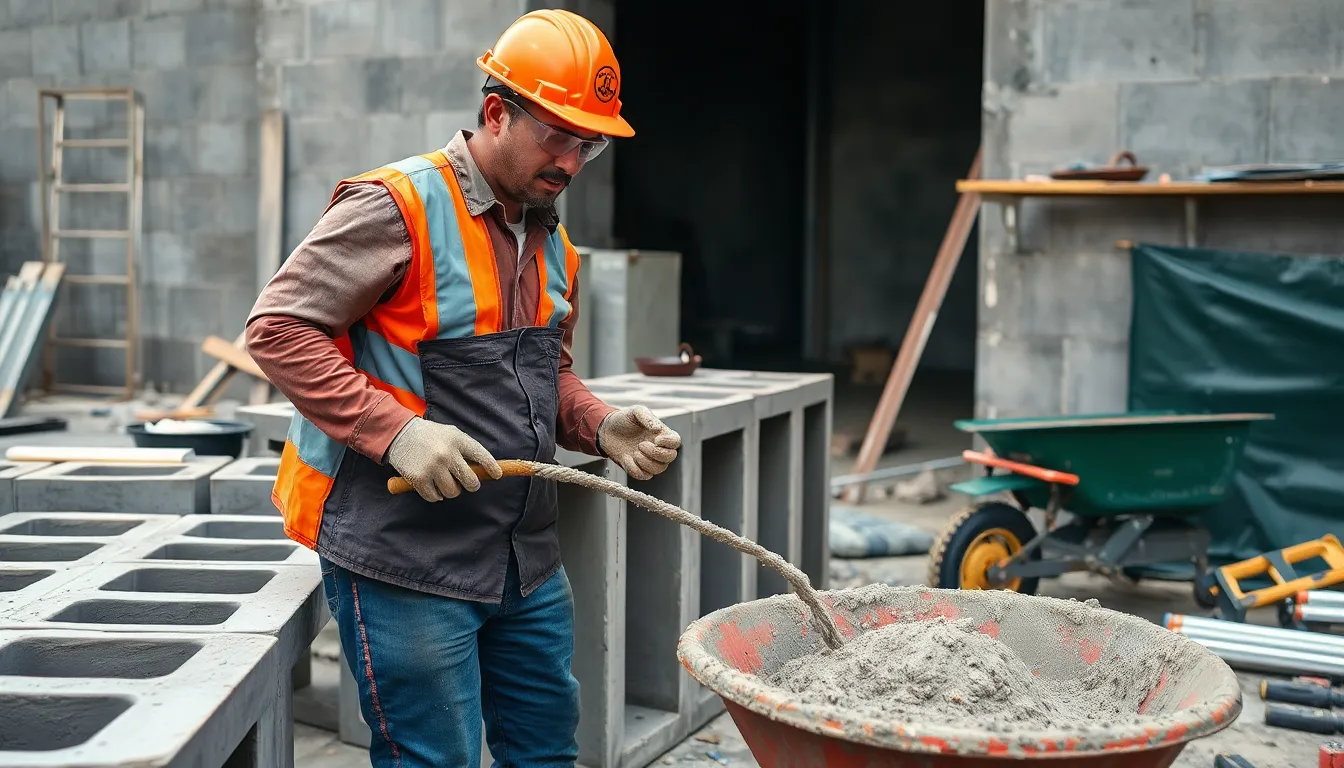
Making concrete blocks on site supports cost control for large-scale building in Chicago and addresses material availability challenges faced by local contractors and homeowners. Reliable block production depends on correct materials, quality molds, and precise production steps.
Required Materials and Tools
DIY block production requires specific materials and equipment.
- Materials: Portland cement ($10–$20 per 94-lb bag), sand (locally sourced), gravel (road base quality), and clean water.
- Tools: Steel or plastic molds ($20–$200+ based on durability and number), mixing equipment (wheelbarrow or concrete mixer), trowel for finishing, and an optional vibrating table for improved compaction.
- Equipment Investment: For large projects, expect upfront costs of $100–$500+ for molds and basic mixing machinery.
Lontto in Chicago supplies block making machines and offers operator training and installation support.
Step-by-Step Overview
Production starts by mixing cement, sand, gravel, and water in a 1:3:5 ratio. Mixtures combine until consistent and lump-free.
Workers fill block molds, compacting the wet mix with a trowel or a vibrating table to remove air pockets.
Blocks remain in molds for 24–48 hours, then workers demold them and place them in moist conditions for curing, lasting 7–28 days for structural strength.
Consistent mold cleaning and moisture control prevent defects and ensure uniformity in finished blocks.
Comparing Costs: Homemade Versus Pre-Made Concrete Blocks
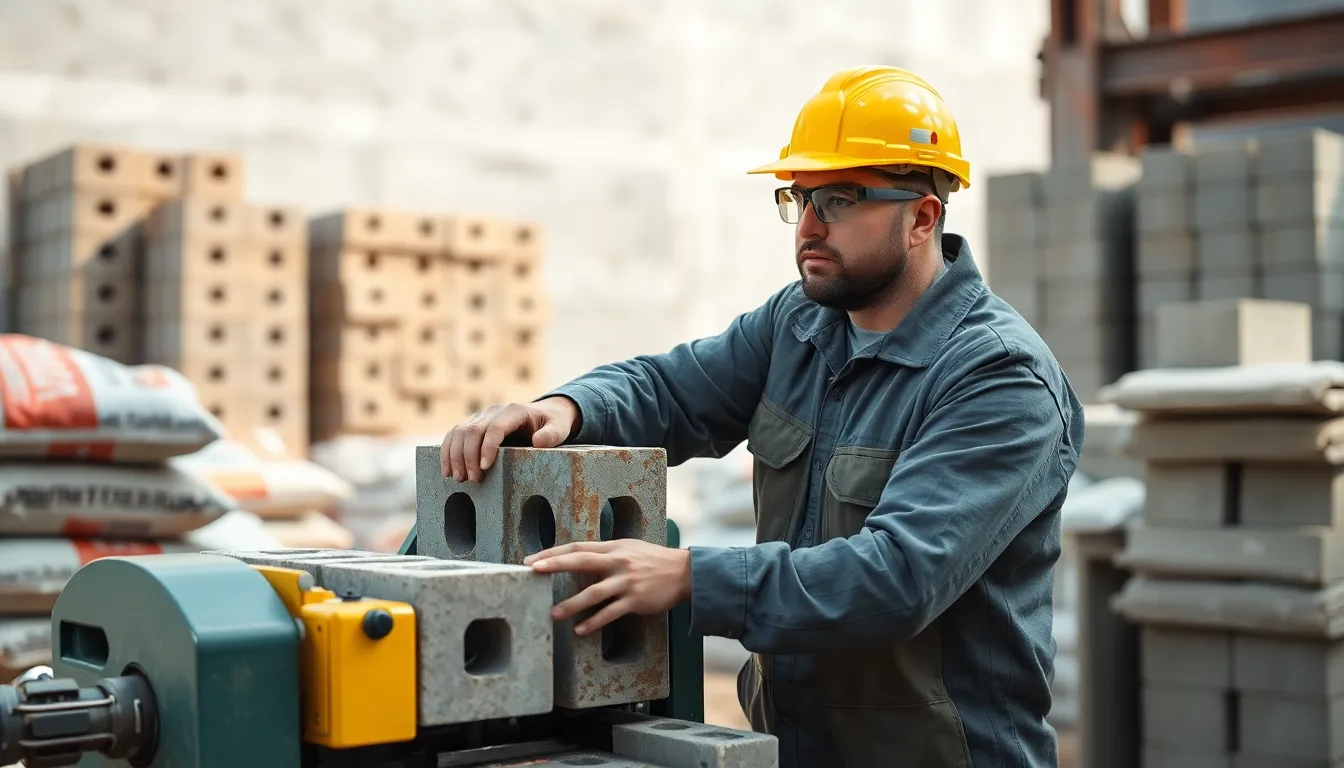
Comparing costs for homemade and pre-made concrete blocks helps builders in Chicago understand potential savings or expenses. Each option involves separate price drivers, time commitments, and operational factors.
Price Breakdown and Calculations
Price calculation reveals that homemade blocks often cost less per unit for large projects if raw materials are sourced at reduced rates. Standard 8”x8”x16” pre-made blocks in Chicago cost $1.25 to $2.50 each. Larger 12”x8”x16” blocks cost $2 to $4 per block.
Homemade blocks require upfront spending for molds and block making equipment. A basic manual mold setup starts at $100, while semi-automatic machines from Lontto cost more but increase production capacity. On-site block production eliminates costs for retailer markups and transportation, saving $0.10 to $0.30 per block for large orders.
A builder calculating homemade block costs includes:
- Material total: Cement, sand, and gravel typically cost $0.40 to $0.70 per block when bought in bulk.
- Equipment amortization: Manual setups increase costs by $0.01 to $0.04 per block if making over 5,000 blocks.
- Labor: DIY labor can be free for owner-builders, though paid help increases per-block costs.
| Expense Type | Homemade Block (per block) | Pre-Made Block (8×8x16) |
|---|---|---|
| Materials (avg) | $0.40–$0.70 | – |
| Equipment (amortized) | $0.01–$0.04 | – |
| Labor (DIY) | Minimal | – |
| Purchase Price | – | $1.25–$2.50 |
| Transportation | – | $0.10–$0.30 |
Production scale brings the greatest cost difference. Homemade methods suit projects over 3,000 blocks, provided skilled labor and materials are available. For projects under 500 blocks, pre-made avoids investment and reduces waste.
Time Investment and Hidden Expenses
Homemade block production demands significant time for mixing, forming, and curing. For example, one operator using a manual mold might make 60–100 blocks daily, meaning a 3,000-block project takes 30–50 days. Lontto’s semi-automatic machines increase capacity, producing up to 4,000 blocks in one eight-hour shift.
Cost considerations include ongoing expenses:
- Equipment maintenance: Parts may need replacement after 10,000–20,000 cycles, with costs of $50–$200 for new molds in Chicago.
- Labor hours: Manual production extends timelines, tying up workers.
- Waste and defect risk: Improper mixing or mold handling increases defective blocks, adding material and disposal costs.
Buying pre-made blocks eliminates these time and maintenance concerns. Blocks arrive ready for installation, minimizing project delays and reducing hidden costs. Lontto supports efficient setup with training for operators, which helps Chicago contractors keep downtime and waste low.
Additional Pros and Cons of Making Concrete Blocks Yourself
Self-producing concrete blocks enables builders in Chicago to control material use and adapt production to project needs. These benefits and constraints depend on project size, resource access, and knowledge of block making machinery standards.
Potential Savings and Customization
Cost savings increase with higher production volumes. Large projects in Chicago that require thousands of blocks realize the most benefit, with the per-block price dropping well below retail costs—material expenses for homemade blocks range from $0.40 to $0.70 each, compared to pre-made block prices of $1 to $4 each. Purchasing raw materials such as cement, sand, and gravel in bulk lowers overall costs further if local suppliers offer competitive rates. Custom block sizes and shapes address unique project requirements. Builders use this flexibility to create specialty blocks for nonstandard wall dimensions or complex designs, which is not feasible with off-the-shelf products.
Common Challenges and Limitations
High upfront investment in molds and machinery creates a challenge. Equipment for manual block production requires at least $100 to $500, and semi-automatic or fully automatic block making machines increase initial costs further. Small projects with limited outputs do not recoup these costs efficiently. Quality consistency depends on operator skill and mold quality; errors produce weak or non-uniform blocks. Skilled labor for mixing, molding, and curing adds to total costs especially in labor-intensive regions like Chicago. Maintenance expenses for equipment—such as regular cleaning, calibration, and repairs—add to hidden costs for manufacturers. DIY block production also requires dedicated storage space for curing, which is a constraint for urban construction sites with limited real estate.
| Expense/Factor | DIY Production | Store-Bought Blocks |
|---|---|---|
| Material Cost per Block | $0.40–$0.70 | $1–$4 |
| Upfront Equipment Cost | $100–$500+ (manual) | None |
| Labor Requirement | Moderate to High | Low |
| Customization | High | Limited |
| Storage Space Needed | Yes | No |
| Quality Control Risk | Higher (depends on operator) | Lower (factory controlled) |
Builders working at larger scales in Chicago benefit from producing blocks themselves by managing resource allocation and cost control. For most small jobs, the challenges often outweigh the economic benefits, even with support services from Chicago-based manufacturers like Lontto.
About Lontto
Lontto is a leading manufacturer based in Chicago, specializing in the production of high-quality block and brick making machines. Under the leadership of CEO Chao Zhang, Lontto offers a wide range of products, including concrete block machines, mobile block making machines, and compressed earth block machines. In addition to manufacturing, Lontto provides comprehensive services such as equipment installation and training to ensure the efficient and effective operation of their machinery. Lontto is committed to delivering reliable solutions for the construction industry, helping clients improve productivity and build quality structures.
Contact:
Chao Zhang, CEO
Phone: 708 260 8300
Email: [email protected]
Address: 4992 S Austin Ave, Chicago, IL 60638, USA
Website: www.block-machine.net
Frequently Asked Questions
Is making your own concrete blocks cheaper than buying pre-made blocks?
Yes, making your own concrete blocks can be significantly cheaper, especially for large projects. Homemade blocks can cost as little as $0.40 to $0.70 per block for materials, while pre-made blocks in Chicago typically cost $1.25 to $2.50 each.
What materials do I need to make concrete blocks at home?
You will need Portland cement, sand, gravel, and clean water. Basic tools required include block molds and mixing equipment. These materials and tools are essential for producing strong and uniform blocks.
How much does it cost to set up for homemade block production?
The initial investment varies. Basic manual tools can cost around $100, while semi-automatic or fully automated machines may require $500 or more. The total setup cost depends on project size and the level of automation desired.
How long does it take to make concrete blocks manually?
Making 3,000 concrete blocks by hand can take between 30 to 50 days, depending on labor and working hours. Using semi-automatic machines can greatly reduce the production time.
What are the main cost factors for producing concrete blocks?
The primary cost factors include the price of raw materials (cement, sand, gravel), labor, and equipment investment. Transportation and retailer markups are avoided with DIY production, increasing savings for larger batches.
Are there hidden costs with homemade concrete blocks?
Yes, hidden costs may include equipment maintenance, mold replacement, storage space for curing, and potential waste from defective blocks. These costs should be considered when planning DIY block production.
What are the advantages of making my own concrete blocks?
Advantages include lower per-block costs for large projects, control over material selection, and adaptability to specific project needs. DIY production also helps manage supply chain issues and allows for on-site customization.
What challenges come with self-producing concrete blocks?
Common challenges are maintaining consistent quality, the need for skilled labor, high up-front equipment costs, and space for curing. Small projects may not benefit as much due to these additional challenges and expenses.
Should I make my own blocks or buy pre-made ones for a small project?
For small-scale projects, buying pre-made concrete blocks is usually more practical and cost-effective. It eliminates the need for equipment, reduces quality concerns, and saves significant time and effort.