When you need custom stainless steel parts for an industrial project, the sourcing decision often comes down to a single question: should you work with a Chinese fabricator or a local domestic shop? Both routes have legitimate advantages, and the right choice depends on your volume, tolerance requirements, budget, and timeline.
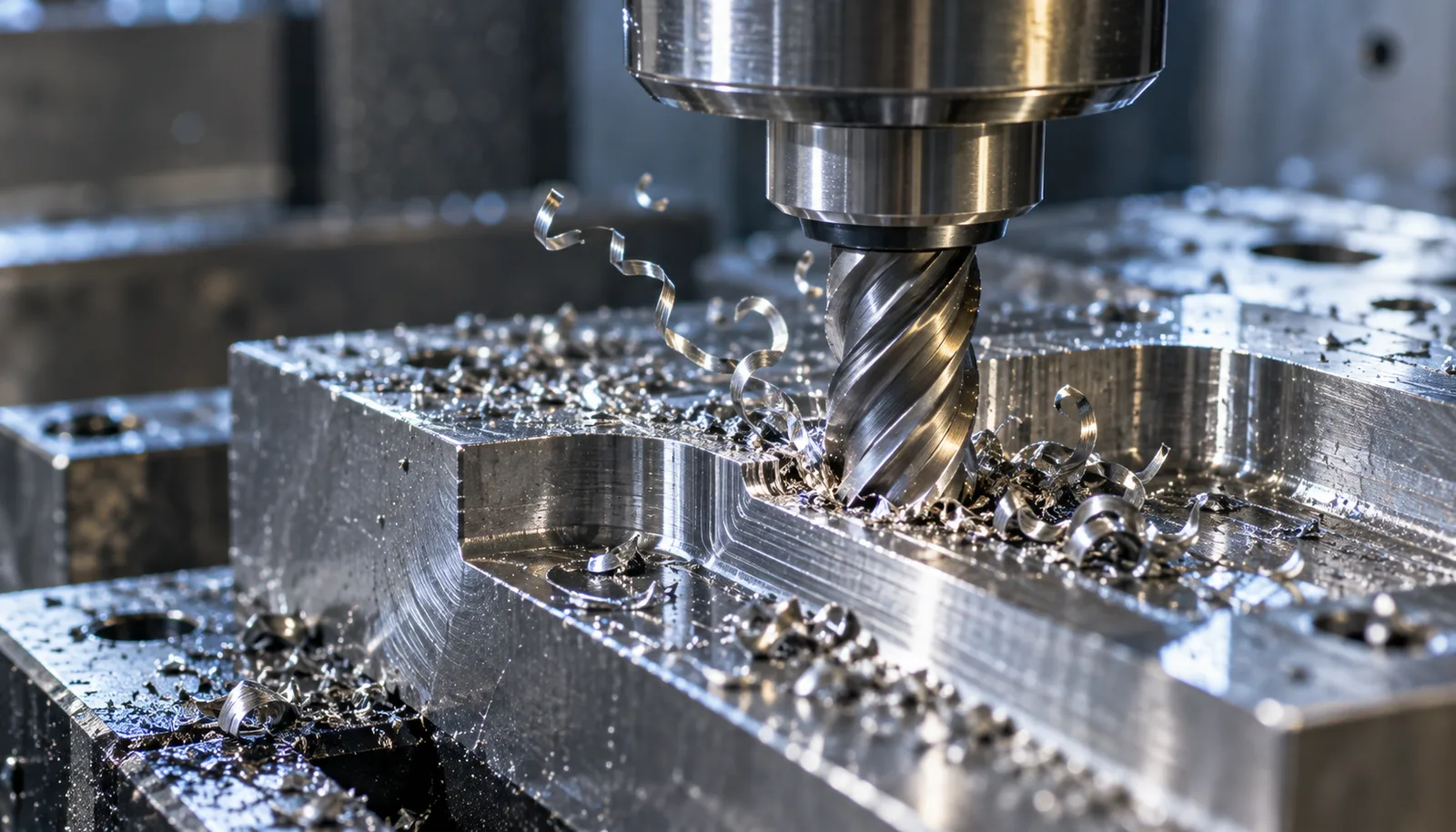
Stainless steel fabrication presents unique challenges. The material can work-harden during machining, requires rigid tooling and controlled cutting speeds, and often demands post-process passivation or welding certification. Whether you source from China or a local supplier, the partner you choose must understand these metallurgical realities as well as the logistics of getting finished parts to your door.
This article compares the two approaches across the factors that matter most: cost, quality, lead time, communication, and risk. The goal is not to crown one option as universally better, but to help you match your project profile to the right supply chain.
Cost and Pricing Structures
Local fabricators typically charge higher per-unit prices. Their overhead includes domestic labor rates, facility costs, liability insurance, and compliance with local environmental and safety regulations. For low-volume prototypes or urgent one-off parts, the premium may be acceptable because you avoid shipping costs and customs delays.
Chinese stainless steel fabrication shops operate with lower labor and facility costs, which translates into significantly lower piece prices. For mid-to-high-volume production runs, the savings can be substantial even after factoring in ocean freight, tariffs, and customs brokerage. Many Chinese shops, including XTJ CNC, offer no-minimum-order-quantity (MOQ) policies, making them accessible for small runs as well.
However, total landed cost is what matters. A quote from a Chinese supplier must include:
- Ex-works or FOB price
- Ocean or air freight
- Import duties and tariffs
- Customs broker fees
- Inland freight to your facility
- Any third-party inspection or testing costs
When you calculate these together, the gap narrows but usually remains in favor of China for volumes above a few hundred parts. Local suppliers become more competitive when you need just a handful of pieces, when lead time is measured in days rather than weeks, or when the design is still evolving and requires close engineering collaboration.
Quality Standards and Certifications
Quality perception is often the biggest concern for buyers considering stainless steel fabrication china. The reality is that reputable Chinese CNC shops now operate to the same international standards as their Western counterparts.
Certifications to Look For
A qualified Chinese fabricator should hold third-party certifications such as ISO 9001:2015 (quality management) and, for automotive or safety-critical work, IATF 16949. These certifications require documented processes, regular audits, and traceability systems. Some shops also maintain RoHS and REACH compliance for material restrictions in European markets.
Material certification is equally important. Stainless steel grades such as 304, 316, and 17-4 PH should come with mill test reports (MTRs) that verify chemical composition and mechanical properties. A reliable Chinese supplier will provide these upon request, just as a local shop would.
How Local Suppliers Differ
Domestic fabricators are often more familiar with U.S. standards such as AWS D1.6 (stainless steel welding code), ASME BPE (bioprocessing equipment), and ASTM A240 (stainless plate specifications). If your application is governed by a specific code — pressure vessels, food processing, or medical devices — a local shop may already hold the relevant accreditation. You can verify this through organizations like the American Welding Society or ASTM International.
The key difference is not that one region produces better quality than the other. It is that quality assurance requires different verification steps depending on distance. With a local shop, you can visit the floor in an afternoon. With a Chinese partner, you rely on documented inspection reports, third-party auditors, and consistent communication protocols.
Lead Times and Logistics
Lead time is often the deciding factor. Local suppliers can turn around a simple stainless steel bracket in a week or two. Complex assemblies may take three to four weeks. Once the parts are ready, ground shipping is measured in days, not weeks.
Chinese fabricators like XTJ CNC advertise prototype delivery in as little as five days. For production quantities, typical lead times range from two to four weeks, depending on material availability and machining complexity. However, you must add two to six weeks for ocean freight, plus time for customs clearance. Air freight can shrink the shipping window to a few days but increases cost significantly.
The Logistics Equation
- Air freight: 3-7 days transit, 5-10x cost of sea
- Sea freight: 20-40 days transit, lower cost
- Customs clearance: 1-5 days depending on documentation accuracy
If your project timeline is flexible, the longer China-to-door lead time is manageable. If you need parts this month, a local supplier is usually the safer choice. Some buyers split their strategy — use China for initial production stock and keep a local shop on retainer for emergency or JIT replenishment.
The U.S. Customs and Border Protection website provides guidance on duties, documentation, and tariff classifications for imported fabricated metal products, which is useful reading before you commit to an overseas supplier.
Communication and IP Protection
Engineering communication across time zones and languages introduces friction. A Chinese fabricator with a U.S. sales office or English-speaking project managers can bridge much of that gap. XTJ CNC, for example, maintains a U.S. address in Carmel, Indiana, which simplifies coordination for North American clients.
Design Feedback and Iteration
When your design changes — and it will — the speed of communication matters. Chinese shops that offer DFM (Design for Manufacturing) analysis will flag potential issues before production starts. That feedback loop works well when both sides are clear on drawing revisions, tolerance callouts, and surface finish requirements. Misunderstandings are more likely when specifications are vague or when GD&T symbols are interpreted differently.
Protecting Your Intellectual Property
IP protection is a genuine concern. Chinese law has strengthened in recent years, but enforcement can be unpredictable. If your design contains proprietary geometry or trade secrets, consider:
- Filing a patent or design registration in China before sharing files
- Using non-disclosure agreements (NDAs) with clear jurisdiction clauses
- Working only with fabricators that have a verifiable track record and existing client base in regulated industries
- Reducing files to STP or STEP formats rather than native CAD files with full feature trees
Local suppliers operate under U.S. IP law, which offers stronger enforcement mechanisms. For highly sensitive designs, the legal protection of a domestic fabricator may outweigh the cost savings of offshore production.
Making the Right Choice for Your Project
There is no single correct answer. The decision depends on your specific trade-offs.
When China Makes Sense
- Production volumes of 500+ parts per year
- Tolerances of ±0.1mm or wider (Chinese shops can achieve ±0.003mm, but tighter tolerances increase inspection risk across distance)
- Stable designs that will not change during production
- Longer lead time windows (8-12 weeks total)
- Cost reduction targets of 30-50% vs local pricing
When a Local Supplier Makes Sense
- One-off prototypes or runs under 50 parts
- Tight deadlines measured in days or weeks
- Designs still in development with frequent revisions
- Applications governed by a specific U.S. code (AWS D1.6, ASME, FDA)
- Proprietary designs where IP risk must be minimized
Many experienced procurement teams use a hybrid model. They source production volumes from a Chinese partner to capture cost advantages while keeping a domestic fabricator qualified and available for quick-turn work and code-critical projects. The approach requires managing two supplier relationships, but it hedges risk across both speed and cost dimensions.
Whichever path you choose, the fundamentals remain the same: define your tolerances clearly, verify certifications upfront, inspect first articles rigorously, and maintain open communication through every stage of production. Stainless steel fabrication demands precision, and the best supplier — whether in Shenzhen or your home state — is the one that delivers that precision consistently.